Recycling and Sustainability at Removals Germany
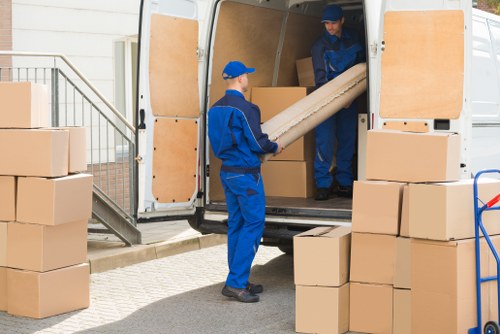 At Removals Germany, sustainability is built into how we plan, load, transport, and dispose of items. Our recycling-focused removals service is designed to reduce landfill, support local reuse, and keep every move as efficient as possible. We aim for a recycling and reuse target of 90% across suitable household, office, and commercial clearances, with the remaining fraction handled through compliant disposal routes. This approach helps ensure that a move is not only practical, but also environmentally responsible.
We work in a way that reflects how local waste systems operate across Germany, including the different borough and district approaches to waste separation. In many areas, items must be separated into specific streams such as paper, packaging, metals, textiles, and residual waste. Our team supports this by sorting goods early in the process, which improves recovery rates and makes it easier to direct items toward the correct recycling destination. The result is a more structured and greener removals process.
As part of our sustainable removals in Germany approach, we prioritise reuse wherever possible. Furniture, appliances, books, and household items are assessed for condition before anything is sent for recycling. If something can be reused, repaired, or redistributed, we choose that option first. This careful sorting reduces unnecessary waste and keeps useful materials in circulation for longer.
 A key part of our service is using local transfer stations and authorised recycling facilities to reduce transport distances and support regional processing. By working with nearby transfer stations, we can direct materials efficiently into the correct waste streams while cutting the carbon cost of long journeys. This is especially important for larger clearances, where mixed loads may contain wood, metal, cardboard, plastics, textiles, and electrical items.
Our team also pays attention to local recycling expectations in urban and suburban areas, where borough-led waste separation rules often encourage careful sorting at source. In practice, this means keeping clean cardboard separate from general waste, setting aside scrap metal for specialist recovery, and ensuring electronics are handled through appropriate routes. These habits improve the quality of recycled materials and support a more circular economy.
We make sure that recyclable items are not treated as leftovers. Instead, they are grouped, checked, and passed into the most suitable system. Removals Germany recycling services are built around responsible handling, so that items with value are reused or recovered before disposal is considered. This method is both practical and resource-conscious, helping households and businesses move with less environmental impact.
 Our partnership network includes charities and community organisations that can benefit from reusable furniture, homeware, clothing, and office equipment. These partnerships give a second life to items that are still in good condition and support local people at the same time. Donating usable goods is one of the most effective ways to reduce waste, because it extends product life and lowers demand for new materials.
Where appropriate, we separate items for donation before any recycling work begins. Sofas, tables, desks, chairs, and storage units may be suitable for charity channels if they meet safety and condition standards. Smaller household items, such as kitchenware or books, can often be passed on as well. This reuse-first mindset is central to our recycling and sustainability policy and helps create a more responsible moving experience.
We also help clients with office and commercial clearances by identifying equipment that can be reused or rehomed. Desks, shelving, filing systems, and some electronics may be suitable for donation or refurbishment. By combining charity partnerships with recycling routes, Removals Germany supports a practical hierarchy of waste management: reuse first, recycle second, dispose last.
Our transport fleet plays an important role in lowering emissions. We use low-carbon vans that are selected for fuel efficiency and reduced environmental impact. These vehicles help cut carbon output during collection and delivery, especially on multi-stop moves and local clearance work. Better route planning also allows us to reduce empty miles and improve load efficiency, which supports our wider sustainability goals.
 In busy areas, efficient vehicle use matters. Compact, well-maintained vans are often better suited to urban streets, controlled parking zones, and shorter transfer journeys than larger trucks. This makes them a practical choice for greener removals, while also reducing disruption for clients and local communities. We aim to combine operational efficiency with environmental care at every stage of the move.
Our eco-conscious removals in Germany approach is not limited to transport. We also consider packing materials, load consolidation, and the careful handling of recyclable materials during transit. Reusable crates and reduced packaging help lower waste, while smarter loading ensures fewer journeys are needed. All of this supports a lower-carbon service that remains dependable and organised.
 Every sustainability decision we make is aimed at improving the full lifecycle of an item, from collection to final destination. Whether materials are reused through charity partners, sorted through local transfer stations, or directed into borough-specific recycling streams, the goal is the same: to keep valuable resources out of landfill. Our work is guided by a strong commitment to responsible waste separation and measurable environmental improvement.
At Removals Germany, recycling is not treated as an afterthought. It is part of the service model, supporting households, offices, landlords, and businesses that want a cleaner and more sustainable way to move. By combining a 90% recycling and reuse target, local transfer station partnerships, charity collaborations, and low-carbon vans, we deliver a greener alternative that reflects modern environmental expectations.