Office Relocation Services in Germany
Moving an office is rarely just a matter of packing boxes. In Germany, it often means coordinating building access, timed loading zones, lifts, parking permits, IT equipment, furniture dismantling, and a schedule that keeps business disruption as low as possible. Whether you are relocating a small practice, a growing start-up, a law firm, a medical office, or a larger corporate team, Office Relocation Services in Germany are designed to help you move efficiently, safely, and with as little downtime as possible.
Local customers usually look for a team that understands the realities of German cities and business districts: narrow streets in older neighbourhoods, shared entrances in office buildings, strict house rules, limited elevator access, and busy delivery times in commercial zones. The right office moving company does more than transport furniture. It plans the move, protects equipment, supports deinstallation and reassembly, and helps your staff stay focused on work rather than logistics.
If you are preparing for an office move, fit-out change, branch relocation, or internal department transfer, it is worth choosing a service that understands both residential-style mixed-use buildings and larger commercial properties. From the first survey to the final placement of desks, careful planning makes a real difference. Request a free quote if you want a practical move plan tailored to your business, your location, and your schedule.
Why Office Relocation in Germany Needs Local Experience

Germany is a highly organised market, but office relocations can still become complicated very quickly. City centres such as Berlin, Hamburg, Munich, Cologne, Frankfurt, Düsseldorf, Stuttgart, and Leipzig often involve time-sensitive access requirements, paid parking bays, loading restrictions, and coordination with landlords or building management. Even in smaller cities and suburban business parks, access routes can be tricky, especially if your office is in a converted building, an upper floor, or a shared commercial property.
A local team brings valuable practical knowledge. They understand how to handle moves in older Altbau properties, modern office towers, industrial estates, coworking spaces, and mixed-use buildings where businesses are located above shops or residential units. They know that one building may allow early access while another requires a narrow time window, and they can adjust the process accordingly. This is one of the main reasons companies choose professional office relocation services rather than trying to manage the move internally.
Local experience also helps with predictable handling of challenges that are common in Germany: stairwells that are too narrow for large desks, elevator booking restrictions, cashless parking requirements, weekend access rules, and the need to protect common areas from scuffs and damage. A move that seems simple on paper can turn into a time-consuming interruption if the team does not know the site conditions in advance.
What Our Office Relocation Services Include
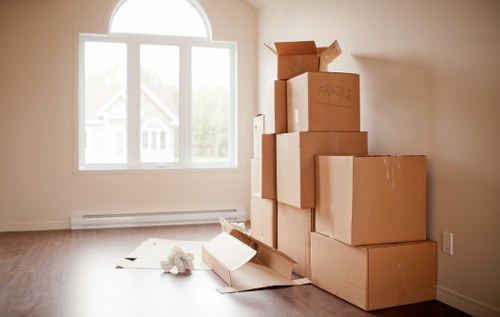
Every office move is different, but a professional relocation service should cover the key steps needed to move your workplace safely and efficiently. For many businesses, that includes planning, transport, dismantling, and reassembly. For others, it may also include secure handling of files, labelled packing systems, furniture disposal, storage support, and coordination with multiple departments.
Typical services for office relocation in Germany may include:
- Pre-move survey to assess furniture, equipment, access, and timing
- Move planning for workstations, departments, and delivery sequences
- Packing support for documents, files, and office contents
- Furniture dismantling and reassembly for desks, cabinets, shelving, and meeting tables
- IT and electronics handling for computers, printers, screens, and peripherals
- Safe transport using suitable vehicles and protective materials
- Placement at destination according to the new office layout
- Optional storage for surplus items or phased moves
- Clearance and disposal support for unwanted office furniture and packaging
Many businesses want a service that goes beyond transport alone. If your office has sensitive equipment, specialised workstations, archives, or heavy filing systems, strong planning and careful handling become essential. A good service should help reduce the pressure on your internal staff and keep the process structured from start to finish.
Who Needs Office Relocation Services in Germany?

Office moves are not limited to large corporate headquarters. In Germany, a wide range of customers can benefit from professional relocation support. Small businesses often need help when moving from a home office or shared workspace into a larger commercial unit. Established companies may need to relocate due to lease changes, expansion, refurbishment, or consolidation of teams. Professional service providers may also need specialised handling for records, cabinets, and equipment.
Common customer types include:
- Start-ups moving into their first dedicated office
- SMEs expanding to more desks or additional meeting rooms
- Law firms, tax offices, and consultancies with sensitive documents
- Medical, dental, or therapy practices moving administrative offices
- Retail head offices and regional branches
- Shared office and coworking tenants changing units
- Schools, training providers, and non-profit organisations
- Industrial and logistics companies relocating administration spaces
In many cases, a business move involves more than a new address. You may need to move server rooms, archive shelves, reception furniture, conference equipment, or specialist storage. A relocation team helps ensure that these items are handled in the right order and arrive at the right place, ready for use.
Book your service now if you want the move organised around your working hours, your building rules, and your business priorities.
How an Office Move Typically Works
A structured process is one of the biggest advantages of hiring professionals. Rather than dealing with a last-minute scramble, your move can be organised in stages. That makes it easier to keep staff informed, minimise disruption, and complete the relocation on time.
The exact process will depend on the size of your office and the destination, but a standard workflow often includes a survey, a planning phase, packing and labelling, the move day itself, and post-move setup. For larger businesses, this may also involve phased relocation over several days or out-of-hours work to avoid interrupting operations.
When you speak with an office relocation provider, it is useful to describe your current location, the type of building, the size of the team, and any special requirements. That information helps create a practical move plan that fits your situation rather than a generic schedule.
1. Initial Assessment and Planning

The move usually begins with a pre-move assessment. This is where the relocation team reviews the current office, the access at both sites, the amount of furniture and equipment, and the layout of the new premises. For customers in Germany, this step is especially important because building conditions can vary widely, even within the same street or business district.
During planning, the team may identify items that need to be dismantled, fragile equipment that should be packed separately, and any obstacles such as narrow corridors, staircases, lift dimensions, or limited parking. They may also recommend a move sequence, such as moving archives first, workstations second, and reception or meeting-room furniture last.
Good planning saves time on the moving day and reduces the chance of delays. It also helps the business decide whether the relocation should happen on a weekday evening, weekend, or in stages across several time slots.
2. Packing, Labelling, and Preparation

Packing office contents is about more than putting items into boxes. Files, stationery, cables, monitors, and personal items need to be organised so they can be unpacked quickly in the new space. Many companies use a room-by-room or department-by-department labelling system to make the process easier for staff.
Preparation can include:
- Sorting items into keep, move, store, or dispose categories
- Labelling desks, cabinets, and boxes by department or destination room
- Backing up data and securing devices before the move
- Preparing documents and archives for secure transport
- Disconnecting equipment in a controlled way
- Removing personal items from workstations
This phase is where businesses can save a lot of time after the move. If boxes are clearly labelled and furniture is dismantled properly, the setup at the new office becomes much faster and less stressful for staff.
What Makes a Local Office Relocation Team Useful?
Choosing a local provider for office relocation services in Germany offers practical advantages that are easy to overlook until move day arrives. A local team is often more familiar with municipal parking rules, traffic patterns, building access procedures, and common property layouts. That knowledge can make the difference between a smooth relocation and a frustrating series of delays.
Local teams are also better positioned to handle short-notice schedule changes. If your landlord adjusts access timing, if a lift is out of service, or if weather creates additional loading challenges, a nearby team can often respond more flexibly. For commercial customers, that flexibility can help avoid delays to reopening, staffing, or client appointments.
Another practical benefit is understanding the mix of property types found across Germany. Many offices are located in modern business parks, but just as many are in older buildings with shared entrances, heritage restrictions, or limited vehicle access. A local service provider can plan around these real conditions rather than relying on assumptions.
Areas and Property Types Commonly Covered
Office relocation services are useful in major business hubs as well as regional centres and surrounding areas. Whether your office is in a central district, a suburban business park, or a mixed commercial-residential neighbourhood, the service should be adapted to the site conditions and move volume.
Typical areas covered by local office movers in Germany may include city centres, industrial estates, enterprise zones, suburban office clusters, and nearby towns. Customers often request support for moves within the same city, between districts, or to neighbouring municipalities when a business expands or changes premises.
Common property types include:
- Multi-tenant office buildings
- Standalone commercial units
- Shared workspaces and coworking buildings
- Converted historic properties
- Mixed-use premises with office floors above retail
- Industrial offices attached to warehouses or production sites
- Practice rooms and administrative suites
Key Benefits for German Businesses
Professional relocation support offers clear benefits for businesses of all sizes. The most obvious one is reduced stress, but the operational advantages are just as important. A well-managed move can help protect equipment, reduce staff downtime, and support a faster restart in the new location.
Other important benefits include:
- Less business interruption through planned scheduling
- Safer handling of heavy, fragile, and valuable items
- Better organisation through labelled packing and room mapping
- Reduced internal workload for your staff
- More efficient setup at the new premises
- Improved protection for floors, walls, lifts, and common areas
For companies relocating sensitive records or specialist office equipment, a trained team can also help reduce the risk of mix-ups and damage. That matters when you are moving under time pressure or when different departments need to be operational again as quickly as possible.
3. Transport, Delivery, and Placement
On moving day, the team should follow the agreed sequence so items are removed, transported, and delivered in a controlled way. Well-organised transport is especially important in German cities where loading bays, road access, and timed delivery windows can be tight. Vehicles should be suitable for the size and volume of the office contents, and protective materials should be used to reduce the chance of damage.
At the destination, items are usually placed according to the plan. That can mean positioning desks in each department, putting boxes in labelled rooms, placing chairs and cabinets in the correct areas, and setting aside items that need later assembly or IT connection. This staged approach helps the new office become usable sooner.
For many businesses, this is the moment when careful preparation pays off. If the layout has been mapped in advance, staff can return to work with less confusion and fewer interruptions. Clear room allocation is especially valuable in larger offices with multiple teams or floors.
Pricing Factors for Office Relocation Services
Costs for office relocation in Germany depend on several practical factors rather than a fixed one-size-fits-all rate. Since every business move is different, it is better to ask for a tailored quote based on your actual requirements. That gives you a more realistic view of the work involved and helps avoid surprises later.
Common pricing factors include:
- The size of the office and number of workstations
- Distance between the old and new premises
- Floor level, lift access, and stair use
- Parking and loading conditions at both sites
- Number of items needing dismantling and reassembly
- Volume of packing materials required
- Special handling needs for IT, archives, or fragile items
- Timing requirements, such as evening or weekend moves
- Need for storage, disposal, or phased relocation
When requesting office relocation services in Germany, it helps to be open about your deadlines and any access constraints. That allows the provider to recommend the right number of movers, the right vehicle size, and the most practical moving plan for your schedule.
Preparation Checklist for a Smooth Office Move
A good checklist can save time and help your staff know what to do before the move. The earlier you begin preparing, the easier it becomes to reduce disruption and keep the relocation under control. Even a small office benefits from a clear plan.
Useful preparation steps include:
- Confirm the move date and access times with building management
- Review the floor plan of the new office and assign room labels
- Back up data and secure all essential digital files
- Notify staff about packing responsibilities and timings
- Sort documents, equipment, and furniture into priority groups
- Identify fragile items, confidential records, and specialist equipment
- Arrange parking or loading access where needed
- Set up a basic unpacking and restart plan for the new premises
It also helps to nominate one internal contact for move coordination. That person can answer questions, approve the floor plan, and make decisions quickly if something changes on the day.
Commercial and Residential-Style Office Moves
Many German businesses operate from spaces that are not traditional office towers. Some use converted flats, shared buildings, or mixed-use properties with offices in residential-style surroundings. In those cases, the move needs to be handled with extra care to respect neighbours, common areas, and local access rules.
For example, an office on the upper floors of a mixed-use building may require a quieter, more controlled move time. A practice located above a retail unit may need stairwell protection and careful coordination with other tenants. A business in a residential district may also need to manage parking and loading in a way that keeps disruption low.
This is another reason why local office relocation services are so valuable. They are used to working within real building conditions, not just warehouse-style environments. That makes them better suited to jobs where access is tight or where the surrounding area requires more careful handling.
How to Reduce Downtime During an Office Relocation
Most customers are not only moving furniture; they are trying to keep the business running. Reducing downtime is therefore one of the main priorities in any office move. The best way to achieve that is by combining preparation, clear communication, and a move schedule that fits your operating hours.
Practical ways to reduce downtime include moving in phases, labelling items clearly, preparing IT connections in advance, and keeping essential documents available until the final stage. Some businesses also choose to move on a Friday evening or over a weekend so that the team can resume work on the next business day.
If your company has multiple departments, consider whether all teams need to move at once. In some cases, it is more efficient to relocate one department at a time or move non-essential items before the main move date. Flexible relocation planning can make the transition much smoother.
Why Businesses Choose a Professional Moving Partner
Office relocation may appear straightforward until the details are counted. Furniture has to be dismantled safely, equipment has to be protected, access has to be managed, and the new workspace has to be ready in the right order. A professional moving partner helps make sure these tasks happen in sequence.
Businesses usually choose a professional partner because they want:
- A practical move plan rather than a rushed last-minute arrangement
- Help with heavy lifting and protective handling
- Experience with business premises and commercial access needs
- Support for both small office moves and larger corporate relocations
- Someone to coordinate details so internal teams can stay focused
When your team does not need to worry about carrying desks or sorting transport logistics, they can spend more time on the real work of reopening, welcoming clients, and getting back into routine.
Frequently Asked Questions
How far in advance should I book an office move?
It is best to book as early as possible, especially if your move needs to happen on a weekend, near a busy season, or in a city centre with restricted access. Early booking gives more time for planning, site checks, and staff preparation.
Can office relocation services handle IT equipment?
Yes, many office relocation providers can help with computers, monitors, printers, and other electronics. Sensitive equipment should be prepared carefully, and data should be backed up before the move.
Do you move offices within the same building?
Yes. Internal office moves, floor relocations, and department reconfigurations are common. These projects still benefit from professional handling, especially if furniture is heavy or the building has access restrictions.
Can the move be done outside office hours?
In many cases, yes. Evening or weekend moves are often preferred by businesses that want to reduce disruption. This depends on the building rules, access arrangements, and the size of the relocation.
What if my new office is not ready yet?
If the new premises are delayed, storage may be useful for some or all items. A relocation provider can often help create a phased plan so the move still stays organised while you wait for final access.
Are packing materials included?
That depends on the service arrangement. Some providers supply boxes, labels, protective wrapping, and other materials as part of the relocation plan, while others offer them as optional additions.
Can you help with furniture disposal?
Yes, many office relocation services can also arrange removal of unwanted furniture and surplus items. This is especially helpful when moving to a smaller office or updating your layout.
Choose a Service That Fits Your Business
Not every office move needs the same level of support, but every move needs careful handling. A small advisory firm may need simple transport and furniture setup. A larger company may need phased relocation, archive management, and after-hours work. The right service should be tailored to your premises, your business hours, and the practical realities of your location.
If you are planning office relocation services in Germany, focus on the details that matter most: access, timing, packing support, furniture assembly, and communication. A reliable local team can help you move with less stress and more confidence, whether you are relocating within the same district or transferring to a new city area.
Contact us today to discuss your office move, request a free quote, and plan a relocation that works for your business. If you are ready to get started, book your service now and make your move easier from the very beginning.